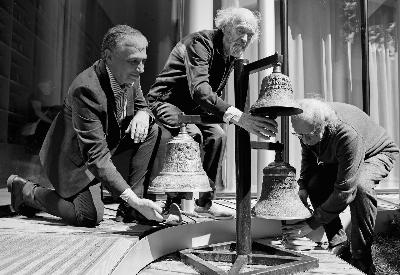
© https://resonances-lyriques.org/
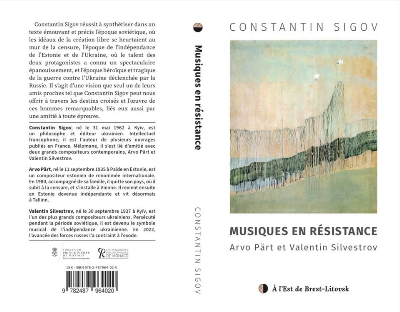
У Франції вийшла книга філософа Костянтина Сігова «Музика спротиву. Арво Пярт і Валентин Сильвестров» («Musiques en résistance. Arvo Pärt et Valentin Silvestrov») — про двох композиторів, які довели, що форма може бути актом свободи. Це не просто біографія. Це історія культурного спротиву — тихого, але принципового. У СРСР звинувачення у «формалізмі» означало політичну неблагонадійність. Пярт і Сильвестров належали до покоління, яке жило в атмосфері інерції сталінських кампаній проти «антинародного мистецтва». Їхня інструментальна музика — без текстів, без гасел — викликала підозру саме тому, що її неможливо було перекласти мовою ідеології. Сігов переконливо показує: справа була не в дисонансах. Головне — ця музика не служила. Вона існувала автономно. Обидва композитори проходили періоди творчої паузи. Для Пярта це завершилося появою стилю tintinnabuli, для Сильвестрова — формуванням його «метамузики». Це були не втечі, а спроби знайти мову, яку не можна підпорядкувати риториці влади. Сігов читає ці естетичні рішення як форму внутрішньої непокори — без декларацій, але з чіткою позицією. Книга побудована як історія не лише творчості, а й багаторічної дружби між Пяртом, Сильвестровим і самим автором. Вони постають не як «національні символи», а як європейські мислителі у звуці. Їх об’єднує переконання: форма — союзниця свободи. Французьке видання Le Monde відзначило книгу як помітну інтелектуальну подію. У рецензії, літературознавиця Олена Бальзамо пише: «Попри невеликий обсяг, ця книга надзвичайно насичена: автор простежує життєві шляхи героїв, аналізує їхню позицію перед тиском влади та показує, як навіть трагічний досвід стає джерелом творчості.
Троє чоловіків знають один одного особисто, і читач стає свідком не лише історичного та музикознавчого викладу, а й своєрідного діалогу — інколи прямого — між двома великими композиторами» Ця оцінка підкреслює головне: перед нами не лише дослідження, а жива розмова між музикою, пам’яттю та сучасністю.
Music Against Empire. Why Kostiantyn Sigov’s Book on Pärt and Silvestrov Matters Today
A new book by philosopher Kostiantyn Sigov, Music in Resistance. Arvo Pärt and Valentin Silvestrov (Musiques en résistance. Arvo Pärt et Valentin Silvestrov), has been published in France. It tells the story of two composers who proved that form itself can be an act of freedom. This is not merely a biography. It is a history of cultural resistance — quiet, yet principled. In the Soviet Union, accusations of “formalism” signified political unreliability. Pärt and Silvestrov belonged to a generation that lived in the lingering atmosphere of Stalinist campaigns against “anti-people art.” Their instrumental music — without texts, without slogans — aroused suspicion precisely because it could not be translated into the language of ideology. Sigov convincingly argues that the issue was not dissonance. The essential point was that this music did not serve. It existed autonomously. Both composers went through periods of creative silence. For Pärt, this led to the emergence of his tintinnabuli style; for Silvestrov, to the development of what he calls “metamusic.” These were not escapes, but attempts to find a language that could not be subordinated to the rhetoric of power. Sigov interprets these aesthetic decisions as forms of inner nonconformity — without declarations, yet with a clear stance. The book is structured not only as a story of artistic development but also as an account of the long-standing friendship between Pärt, Silvestrov, and the author himself. They appear not as “national symbols,” but as European thinkers in sound. What unites them is a shared conviction: form is an ally of freedom. The French newspaper Le Monde described the book as a notable intellectual event. In her review, literary scholar Elena Balzamo writes: “Despite its modest size, this book is remarkably rich: the author retraces the protagonists’ life paths, analyzes their stance in the face of pressure from power, and shows how even tragic experience can nourish artistic creation. The three men know each other personally, and the reader witnesses not only a historical and musicological development, but also a kind of dialogue — sometimes direct — between the two great composers.”This assessment highlights the essence of the book: it is not merely a study, but a living conversation between music, memory, and the present.
Foto Facebook Constantin Sigov
©
2777