© www.dhnet.be
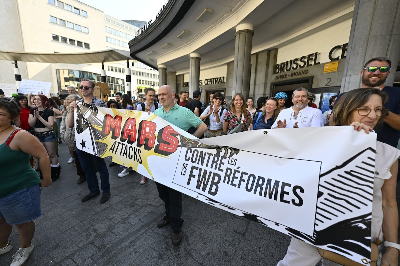
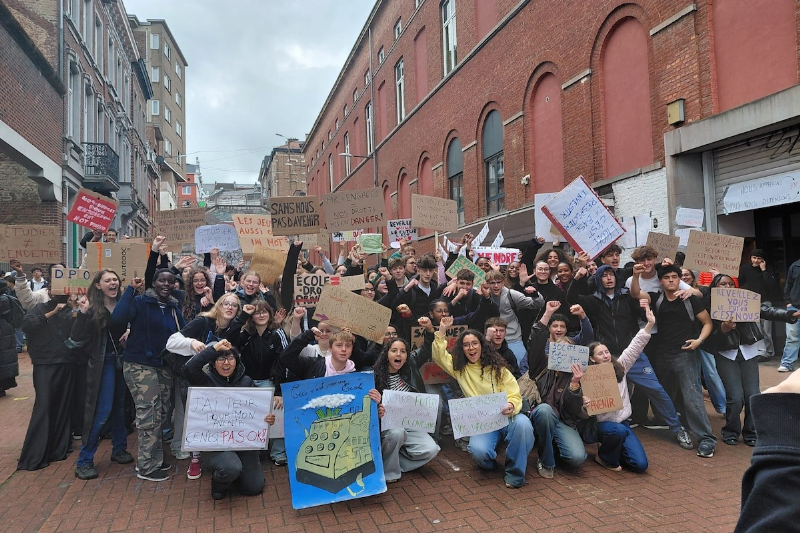
Кілька сотень представників освітньої сфери, переважно вчителів, а також студенти й активісти зібралися біля парламенту Федерації Валлонія—Брюссель, вимагаючи переглянути пакет реформ Décret Programme 2. Демонстрацію організував міжмережевий колектив Mars Attacks, що об’єднує учасників освітньої сфери Федерації Валлонія—Брюссель. Акція відбулася за значної присутності поліції, але без серйозних інцидентів. На відміну від демонстрації 4 червня, коли сталися сутички, а поліція застосувала сльозогінний газ і водомети, протест 8 липня мав переважно символічний і політичний характер.На той момент Décret Programme 2 уже був ухвалений парламентом. Протестувальники зібралися під час розгляду двох пропозицій опозиційних партій PS, Ecolo і PTB, спрямованих на скасування найбільш суперечливих положень реформи. Перша стосувалася підвищення реєстраційної плати у вищій освіті — minerval. Друга передбачала скасування приблизно 10-відсоткового збільшення аудиторного навантаження для частини викладачів старших класів. Правляча більшість партій MR і Les Engagés відхилила обидві пропозиції.

marsattacks.be
Водночас парламент схвалив тимчасовий захисний механізм для частини пріоритетних учителів із тимчасовими контрактами, які можуть втратити години через перехід від 20 до 22 навчальних періодів на тиждень. Їм мають надати додаткові педагогічні або організаційні завдання. Механізм діятиме до грудня 2026 року, але після оцінювання може бути продовжений до 2 липня 2027 року. Décret Programme 2 виходить далеко за межі регулювання робочого часу. Він містить положення щодо середньої та вищої освіти, оплати праці, лікарняних, навантаження викладачів, культури, мистецької освіти, шкільної інфраструктури, молодіжних організацій і наукових досліджень. Через такий масштаб противники реформи називають її не просто зміною трудових правил, а переглядом суспільної моделі освіти.
www.dhnet.be
Одне з головних нововведень — збільшення навантаження для викладачів загальних і технічних дисциплін у старших класах до 22 навчальних періодів на тиждень. Учителі наголошують, що це означає також більше підготовки, перевірки робіт, адміністративної документації та контактів із батьками, хоча ця робота не враховується в офіційній кількості аудиторних годин. Реформа посилює й правила щодо лікарняних. Працівник зможе використати не більш як три окремі дні відсутності через хворобу без медичної довідки протягом навчального року. Для людей із визнаними тяжкими тривалими захворюваннями зберігається ліміт у 12 днів. Після вичерпання накопичених лікарняних і переходу в режим непрацездатності disponibilité pour maladie працівник отримуватиме 60% останньої активної зарплати. Терапевтичне скорочення робочого часу обмежується двома окремими періодами тривалістю до двох років кожен, із винятками для тяжких тривалих захворювань. У вищій освіті стандартний щорічний minerval встановлено на рівні €1 194. Для студентів проміжної категорії доходів він становитиме €835, а для студентів зі скромними матеріальними умовами — €374. Одержувачі офіційної навчальної допомоги звільняються від плати.
У протестних дописах в Instagram і Facebook реформу часто називали «платою у €1 200 для студентів». Хоча офіційна система передбачає різні суми залежно від матеріального становища, студентські організації попереджають, що підвищення може посилити фінансовий тиск на молодь, змушуючи частину студентів більше працювати паралельно з навчанням або переглядати рішення про вступ.

Уряд Федерації Валлонія—Брюссель пояснює зміни погіршенням державних фінансів. За офіційними прогнозами, бюджетний дефіцит у 2026 році становитиме приблизно €1,6 млрд. Влада планує заощадити понад €500 млн до 2029 року та стабілізувати щорічний дефіцит на рівні близько €1,2 млрд. Нинішня мобілізація розвивається на тлі протестів, що тривають із початку 2025 року, коли тисячі франкомовних учителів і учнів виступали проти скорочення освітнього фінансування, змін у професійній освіті, умовах працевлаштування та федеральної пенсійної реформи. Безпосереднім поштовхом до нового етапу конфлікту стали бюджетні рішення уряду Федерації Валлонія—Брюссель і підготовка Décret Programme 2. Оскільки освіта в Бельгії належить до компетенції мовних спільнот, реформа стосується насамперед франкомовної освітньої системи Валлонії та Брюсселя, а не всіх бельгійських шкіл.
Для учасників протесту конфлікт виходить за межі умов праці. Вони розглядають державну освіту як суспільну інституцію, що забезпечує доступ до знань, культури та підтримки для дітей із різним соціальним походженням. У такому розумінні суперечка стосується не лише бюджетної економії, а й майбутньої ролі держави в освіті. Mars Attacks, або «Марс атакує!», — міжмережеве об’єднання учасників освітньої сфери Федерації Валлонія—Брюссель, створене в березні 2026 року. Його назва відсилає до фільму Тіма Бертона. Представники руху стверджують, що реформи міністерства погіршують умови праці й навчання та негативно впливають на учнів.
Budget austerity brings teachers and students back onto the streets of Brussels
Several hundred representatives of the education sector, mainly teachers, as well as students and activists, gathered outside the Parliament of the Wallonia-Brussels Federation to demand a review of the reform package known as Décret Programme 2. The demonstration was organised by Mars Attacks, a cross-network collective bringing together participants from across the Wallonia-Brussels Federation’s education sector. The protest took place amid a significant police presence but passed without serious incident. Unlike the demonstration on 4 June, when clashes broke out and police used tear gas and water cannon, the protest on 8 July was largely symbolic and political in nature. By then, Décret Programme 2 had already been approved by parliament. Protesters gathered as lawmakers considered two proposals submitted by the opposition parties PS, Ecolo and PTB, which sought to repeal the reform’s most controversial provisions.
The first concerned the increase in higher-education registration fees, known in Belgium as the minerval. The second proposed reversing an increase of approximately 10 per cent in classroom teaching hours for some upper-secondary teachers. The governing majority formed by MR and Les Engagés rejected both proposals. At the same time, parliament approved a temporary protection mechanism for some priority-status teachers on temporary contracts who could lose teaching hours as weekly requirements rise from 20 to 22 periods. They are to be assigned additional pedagogical or organisational duties. The mechanism will remain in force until December 2026 but may, following an assessment, be extended until 2 July 2027.
Décret Programme 2 goes far beyond the regulation of working hours. It contains provisions concerning secondary and higher education, pay, sick leave, teaching workloads, culture, arts education, school infrastructure, youth organisations and scientific research. Because of its scope, opponents describe it not merely as a change to employment rules but as a reshaping of the social model of education. One of the principal changes is an increase in the workload of teachers of general and technical subjects in upper-secondary schools to 22 classroom periods a week. Teachers stress that this also means more lesson preparation, marking, administrative paperwork and contact with parents, although this work is not included in the official calculation of classroom hours.
The reform also tightens sick-leave rules. An employee will be allowed no more than three separate days of absence due to illness without a medical certificate during the school year. People with recognised serious long-term conditions will retain an allowance of 12 days. Once accumulated sick leave has been exhausted and an employee enters the incapacity status known as disponibilité pour maladie, they will receive 60 per cent of their most recent salary while in active employment. Therapeutic reductions in working hours will be limited to two separate periods of up to two years each, with exemptions for serious long-term conditions.
In higher education, the standard annual minerval has been set at €1,194. Students in an intermediate income category will pay €835, while those in more modest financial circumstances will pay €374. Recipients of officially recognised study assistance will be exempt from the fee. In protest posts shared on Instagram and Facebook, the reform has frequently been described as a “€1,200 fee for students”. Although the official system sets different amounts according to financial circumstances, student organisations warn that the increase could place greater financial pressure on young people, forcing some to work longer hours alongside their studies or reconsider whether to enrol.
The government of the Wallonia-Brussels Federation says the changes are a response to the deterioration in the public finances. According to official forecasts, the budget deficit is expected to reach approximately €1.6bn in 2026. The authorities intend to make more than €500m in savings by 2029 and stabilise the annual deficit at around €1.2bn. The current mobilisation comes against the backdrop of protests that have continued since early 2025, when thousands of French-speaking teachers and pupils demonstrated against cuts to education funding, changes to vocational education and employment conditions, and the federal pension reform. The immediate trigger for the latest phase of the dispute was a series of budget decisions taken by the Wallonia-Brussels Federation government and the preparation of Décret Programme 2.
Because education in Belgium falls within the powers of the country’s language communities, the reform primarily affects the French-speaking education system in Wallonia and Brussels rather than Belgian schools as a whole. For those taking part, the dispute extends beyond working conditions. They regard public education as a social institution that provides access to knowledge, culture and support for children from different social backgrounds. From this perspective, the argument concerns not only budget savings but also the future role of the state in education. Mars Attacks, or “Mars Attacks!”, is a cross-network collective of participants in the Wallonia-Brussels Federation’s education sector, established in March 2026. Its name refers to Tim Burton’s film of the same title. Representatives of the movement argue that the ministry’s reforms are worsening working and learning conditions and having a negative effect on pupils.
2287