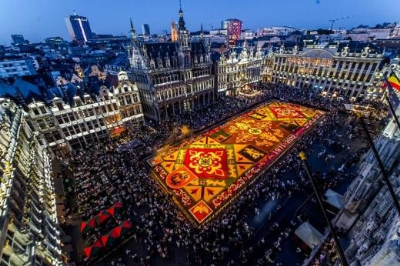
© Flower Carpet
У Брюсселі з 13 до 16 серпня 2026 року Гран-Плас знову перетворилася на гігантське полотно з живих квітів. Цьогорічний Brussels Flower Carpet був присвячений 160-річчю дипломатичних відносин між Бельгією та Японією. Японський художник Хіро Суґіяма переосмислив знамениту «Велику хвилю в Канагаві» Хокусая, а композицію виклали сотнями тисяч жоржин на площі близько 1 680 квадратних метрів.
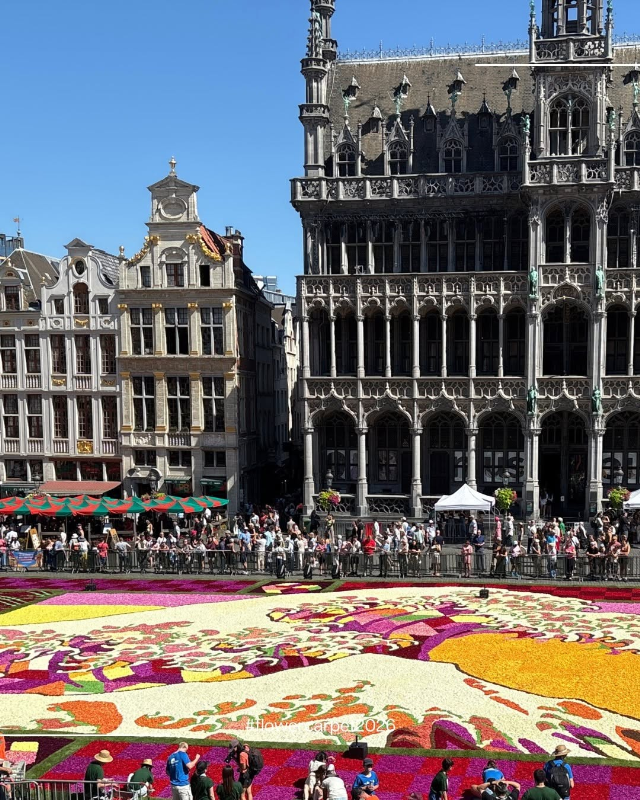
Традиція квіткового килима на Гран-Плас бере початок у 1971 році, а з 1986-го подію проводять раз на два роки. Вона виросла з бельгійської культури декоративного садівництва та стала однією з найвідоміших візуальних традицій Брюсселя. Над композиціями працюють дизайнери, квітникарі та волонтери, які за лічені години перетворюють історичну площу на масштабну тимчасову інсталяцію.
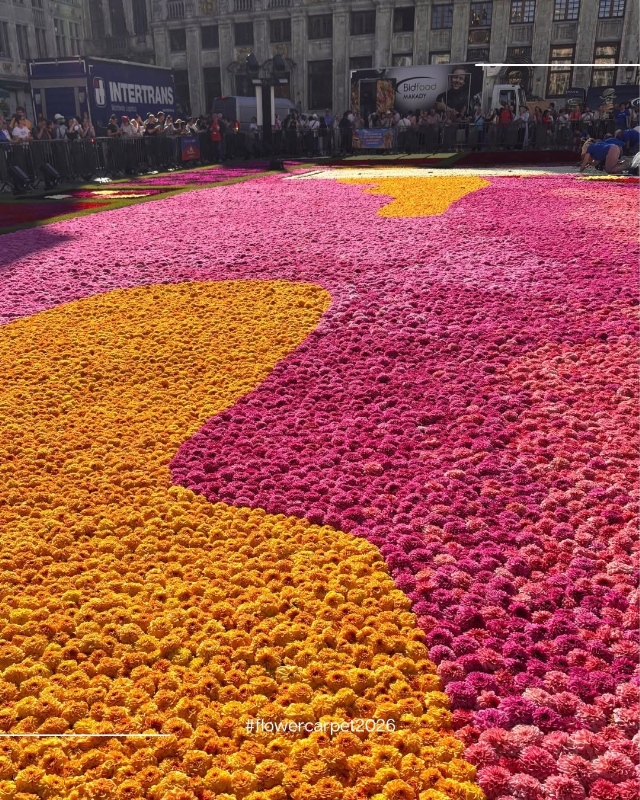
Видання 2026 року вирізнялося не лише японською темою. Уперше організатори створили другий квітковий килим біля Брюссельської біржі, натхнений хмелем і бельгійською пивоварною традицією. Таким чином фестиваль вийшов за межі однієї площі та перетворився на ширший міський маршрут, поєднавши культурну дипломатію, сучасне мистецтво й одну з найвпізнаваніших бельгійських традицій.
700.000 Flowers and The Great Wave: Brussels Honours Japan
From 13 to 16 August 2026, Brussels’ Grand-Place was once again transformed into a vast canvas of living flowers. This year’s Brussels Flower Carpet marked the 160th anniversary of diplomatic relations between Belgium and Japan. Japanese artist Hiro Sugiyama reimagined Hokusai’s iconic The Great Wave off Kanagawa, with hundreds of thousands of dahlias arranged across an area of around 1,680 square metres.The tradition of the Flower Carpet on the Grand-Place dates back to 1971, and since 1986 the event has been staged every two years. Rooted in Belgium’s long-standing culture of ornamental horticulture, it has become one of Brussels’ best-known visual traditions. Designers, flower growers and volunteers work together to transform the historic square into a large-scale temporary installation in a matter of hours.
The 2026 edition stood out for more than its Japanese theme. For the first time, organisers created a second floral carpet near the Brussels Stock Exchange, inspired by hops and Belgium’s brewing heritage. The festival therefore extended beyond the Grand-Place into a broader city-centre trail, bringing together cultural diplomacy, contemporary art and one of Belgium’s most recognisable traditions.
1048