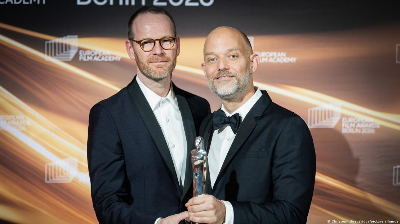
© Фото: Christoph Soeder/dpa/picture alliance
У Берліні відбулася церемонія вручення Європейської кінопремії, яку часто називають «європейським Оскаром». Головним переможцем вечора стала драма «Сентиментальна цінність» норвезького режисера Йоакім Трієр, що отримала одразу шість нагород, зокрема за найкращий європейський фільм. Стрічка, присвячена складним і крихким стосункам між батьком і донькою, була також відзначена за режисуру та сценарій. Акторські нагороди дісталися Стеллан Скарсгард та Ренате Реінсве, чия робота критиками була названа емоційно стриманою, але глибоко руйнівною. Сценарій фільму написали Йоакім Трієр та Ескіль Фогт. Другим за кількістю відзнак став іспансько-французький фільм Сірат режисера Олівера Лаше — він отримав п’ять нагород, зокрема за кастинг, монтаж та операторську роботу.
Серед технічних категорій відзначили німецьку стрічку Звук падіння режисерки Маші Шилінські, яка здобула нагороду за найкращі костюми, а також фільм Бугонія Йоргоса Лантімоса — за грим і зачіски. Найкращим документальним фільмом було визнано Річка смерті Ігоря Безиновича. Премію за життєві досягнення отримала норвезька акторка та режисерка Лів Ульманн. Церемонію відкрив іранський режисер Джафар Панахі, який у своїй промові звернувся до теми придушення протестів в Ірані, попередивши про небезпеку нормалізації насильства, якщо міжнародна спільнота не реагує на нього вчасно. Фінські медіа, зокрема культурні оглядачі Helsingin Sanomat і Yle, звернули особливу увагу на скандинавський ренесанс у європейському кіно. На їхню думку, успіх фільму Йоакіма Трієра підтверджує зростаючий вплив північних кінематографій, які поєднують стриману естетику з гострим психологічним аналізом. Фінські критики також наголосили, що домінування норвезької стрічки на церемонії в Берліні символізує зміщення центру європейського авторського кіно на Північ — тенденцію, яка дедалі частіше визначає фестивальні та преміальні підсумки останніх років.
European Film Awards: the triumph of a Scandinavian drama and political undertones at the Berlin ceremony
The European Film Awards ceremony, often described as the “European Oscars,” took place in Berlin. The main winner of the evening was the drama “Sentimental Value” by Norwegian director Joachim Trier, which received six awards, including Best European Film. The film, which explores the fragile and complex relationship between a father and his daughter, was also honoured for Best Director and Best Screenplay. Acting awards went to Stellan Skarsgård and Renate Reinsve, whose performances were described by critics as emotionally restrained yet deeply affecting. The screenplay was written by Joachim Trier together with Eskil Vogt. The second most awarded film of the night was the Spanish–French production “Sirat” by director Oliver Laxe, which won five prizes, including awards for casting, editing and cinematography. In the technical categories, the German film “The Sound of Falling” (original title: In die Sonne schauen) by director Mascha Schilinski received the award for Best Costume Design, while “Bugonia” by Yorgos Lanthimos was recognised for Best Make-up and Hairstyling. The documentary “River of Death” by Igor Bezinović was named Best Documentary Film. The Lifetime Achievement Award was presented to Norwegian actress and director Liv Ullmann. The ceremony was opened by Iranian director Jafar Panahi, who used his speech to address the suppression of anti-government protests in Iran. He warned that if the international community fails to respond to such violence, it risks becoming normalised and spreading beyond national borders.
Finnish media, including cultural commentators from Helsingin Sanomat and Yle, paid particular attention to what they described as a Scandinavian renaissance in European cinema. According to Finnish critics, the success of Joachim Trier’s film confirms the growing influence of Nordic filmmaking, which combines restrained aesthetics with sharp psychological insight. They also noted that the dominance of a Norwegian production in Berlin symbolises a broader shift of the centre of European auteur cinema towards the North — a trend increasingly reflected in festival line-ups and major film awards in recent years.
2863